
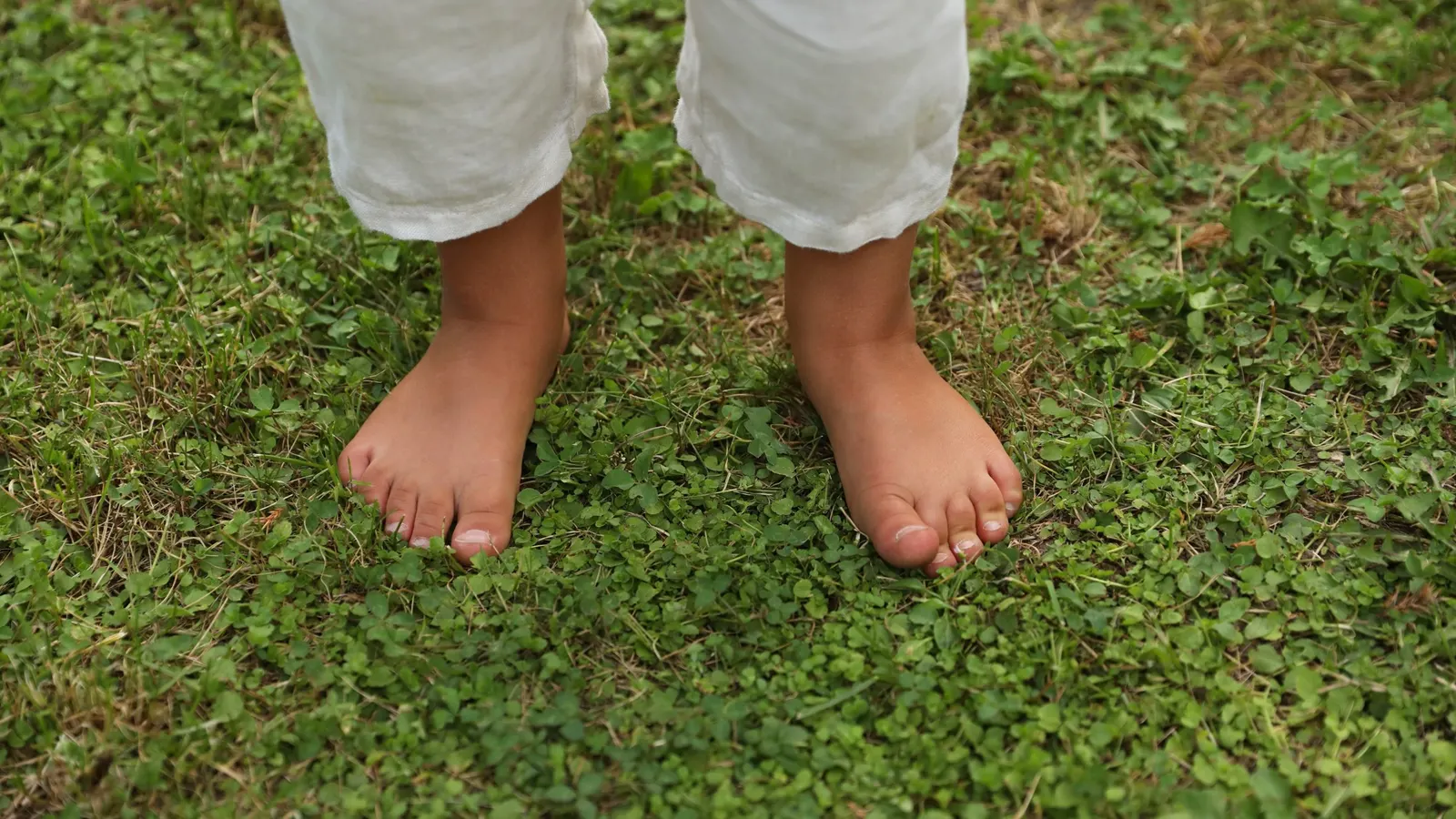
Understanding in-toeing and out-toeing (pigeon-toed)
In-toeing, often called being pigeon-toed, means a child's feet point inward when they walk or run. Out-toeing means the feet point outward. Both are very common in children, and in most cases they are a normal stage of growth. Parents often notice it when a toddler starts to walk, or when an older child trips over their own feet.
The cause is usually found higher up in the leg, not in the foot itself. In-toeing may come from a twist in the shin bone, a twist in the thigh bone or the way a baby was positioned before birth. Out-toeing can come from the hips or from flat feet. Most children outgrow these patterns as their bones and muscles mature, but not all do.
At our Kirkland office, Dr. Kate Cryderman and Dr. Lawrence Maurer see kids from Totem Lake, Bellevue, Redmond and nearby. We check the whole leg, not just the foot, so we can tell what is normal and what needs a closer look. Most families leave with clear answers and a simple plan.
Signs and symptoms
- Feet that point inward or outward when your child walks or runs
- Frequent tripping or clumsy steps
- Sitting in a W shape with the legs behind
- Knees that point inward when standing
- Shoes that wear out on one side
- Complaints of tired legs after play
- A limp or pain, which is not typical and should be checked
Common causes
Twist in the shin bone
The shin bone can have a gentle twist that turns the foot inward. This often improves as a child grows.
Twist in the thigh bone
A twist in the thigh bone can turn the knees and feet inward. It is common between ages 3 and 8.
Curved foot shape
Some babies and toddlers have a foot that curves inward at the front. It often straightens with time.
Hip position and flexibility
Tight or very flexible hips can change how the legs turn. This can lead to in-toeing or out-toeing.
Flat feet and sitting habits
Flat feet can make the feet turn out. Long periods of W-sitting may also play a part in some kids.
How we diagnose it
We start by asking when you noticed the turning, whether it is getting better or worse and whether your child has pain. Then we look at how your child stands, walks and runs. We check the foot, shin, knee and hip, and measure how the legs rotate. Most children do not need an X-ray. We may suggest one or other tests if we see signs that point to a different problem. We do not guess from looks alone, so the exam matters.
Biomechanical exam and gait analysis are part of how we work.
Treatment options
We start with conservative care. Surgery is only discussed when it is the best option for you.
- 1
Watch and wait
For many kids, the best plan is regular checks while they grow. Most in-toeing and out-toeing improve without treatment.
- 2
Sitting and play habits
We may suggest changing how your child sits, for example less W-sitting. Simple habits can help the legs rest in a better position.
- 3
Stretching and strengthening
Gentle exercises may help the hips and legs work well together. We show your child how to do them in a fun way.
- 4
Shoe and insert advice
Shoes or inserts may help if flat feet or poor support add to the problem. We choose them to fit your child's feet and activities.
- 5
Braces or surgery
These are rarely needed. We only talk about them if the turning is severe or causes real trouble, and we explain the pros and cons first.
When to see a podiatrist
- Your child limps or says their legs or feet hurt
- The turning is getting worse, not better
- Only one foot or leg turns in or out
- Your child trips often or cannot keep up in play
- The turning has not eased after age 8
- You simply want a clear answer from a specialist
Prevention tips
- Encourage your child to sit cross-legged or on their heels instead of W-sitting
- Choose shoes that fit well and have room for the toes
- Keep up with regular checkups as your child grows
- Offer plenty of active play, running and climbing
- Bring your child's everyday shoes to the visit so we can check the wear
Frequently asked questions
Will my child outgrow being pigeon-toed?
Most children do. In-toeing often improves by age 8 as the bones and muscles mature. A few kids keep a mild turn. Regular checks help us see how your child is doing.
Is W-sitting bad for my child?
W-sitting is common. It may keep the hips and legs in a position that supports in-toeing, so it is better to mix in other ways of sitting. Ask us if it worries you.
Do kids need braces or special shoes?
Usually not. Shoes and braces rarely change how the bones grow. We only suggest them when there is a clear reason.
Does in-toeing cause pain?
It usually does not. Pain, a limp or swelling is not typical and should be checked by a doctor.
What age should I bring my child in?
Any age. If you see a pattern that worries you, we are happy to take a look. Early checks give you answers and let us track changes over time.
Related care
This page is general information. It is not medical advice and it does not replace an exam. If you have severe pain, an open wound, fever, or sudden numbness, get urgent care. Last updated.